Okay, I need to tackle this query about "que veut dire cdl." The user wants a French article targeting detail-oriented researchers, using a story-driven approach with practical solutions. The data provided has an image URL related to "Golden Pearly Gates Of Heaven," which I should use if possible.
First, the main keyword is "que veut dire cdl." I should start by explaining what CDL stands for in French. Common meanings could be things like "Certificat de Dépôt Légal" or maybe a company acronym. Since there's no data provided about CDL, I need to infer possible meanings based on common usage. But the user mentioned if the keyword is empty or unclear, use the most relevant data, which is the image. However, the image seems unrelated to CDL. Hmm, maybe the image is a placeholder or there's a mistake. Since they want to incorporate the image, perhaps CDL is related metaphorically to the pearly gates, maybe in a context like religious studies or symbolism. But that's a stretch.
Wait, the user says if the data is empty or unclear, fall back. Since the keyword "CDL" might not be clear here, maybe I need to focus on the image instead. The image is about the Pearly Gates, so perhaps the article is about symbolism or religious iconography. However, the keyword is supposed to be central. Let me check again. The user wants the keyword in the title and opening, but if the keyword isn't clear, use the image's topic. Since CDL isn't clear here, perhaps the article should discuss the Pearly Gates as per the image, using the keyword in the title and intro even if it's not directly related. That might be the fallback.
But how to connect "que veut dire cdl" with the image? Maybe CDL is a typo or shorthand for something else. Alternatively, if CDL refers to a company, maybe the image is decorative. The user's instructions say to use the image URLs provided, so I need to include that image alt text relevantly. The alt is "Golden Pearly Gates Of Heaven," which might relate to symbolism in religion or art. So even if CDL is unclear, the article should be about interpreting the image. But the keyword is important. Maybe the article is about decoding meanings or symbols, and the image is an example. Let's try that approach.
The title needs to include the keyword. So something like "Que veut dire CDL : Décrypter le Symbolisme des Portes Célestes" (What does CDL mean: Decoding the Symbolism of Heavenly Gates). Then in the intro, say that while CDL may refer to an acronym, this article explores the symbolism of the pearly gates. The sections can discuss different interpretations of such imagery, using the image provided.
But the user wants the article to be about the keyword. If CDL is not defined, but the image is about pearly gates, perhaps the article is about the various meanings of CDL and uses the image as an example of symbolic gates. However, this is speculative. To stay safe, maybe proceed under the assumption that the keyword doesn't have a clear meaning, so the article shifts focus to the image topic. The user's instructions allow for this. So the article would be titled with the keyword, explain that CDL isn't clearly defined here, then discuss the symbolism of the pearly gates using the image. The alt text should be descriptive for the image, like "Golden Pearly Gates as a Symbol of Divine Access in Art and Religion."
Structure-wise, start with an intro explaining the ambiguity of CDL and transitioning into the image's topic. Then sections on historical significance, cultural interpretations, and modern usage. Each section uses the image to support points. Since the image is the only data, the article must pivot around that, connecting it to the keyword as best as possible. Need to make sure the keyword is mentioned naturally in the title and intro, but if CDL is unclear, the article focuses on the image instead.
Le terme "CDL" ne possède pas de signification universellement reconnue, mais lorsqu’on croise son chemin avec l’imaginaire des "portes célestes" dans l’art religieux et la symbolique, une réflexion s'impose sur les métaphores de l'au-delà. Illustration à l'appui, ce récit explore comment des symboles visuels, comme les portes dorées entrevues au-dessus des nuages, guident la conscience humaine vers des interprétations profondes du paradis, de la transcendance et de la quête spirituelle.
Les Portes Célestes : Entre Mythes Anciens et Représentations Visuelles
Dans les traditions religieuses monothéistes, les "portes du ciel" figurent souvent comme des passages vers un état de grâce éternelle. L’image d’une barrière scintillante, entourée de nuages, comme celle observée ici, rappelle des visions bibliques ou des descriptions mystiques. En art, ces portes n’existent pas simplement pour décorer : elles incarnent les aspirations humaines à surmonter la condition terrestre. 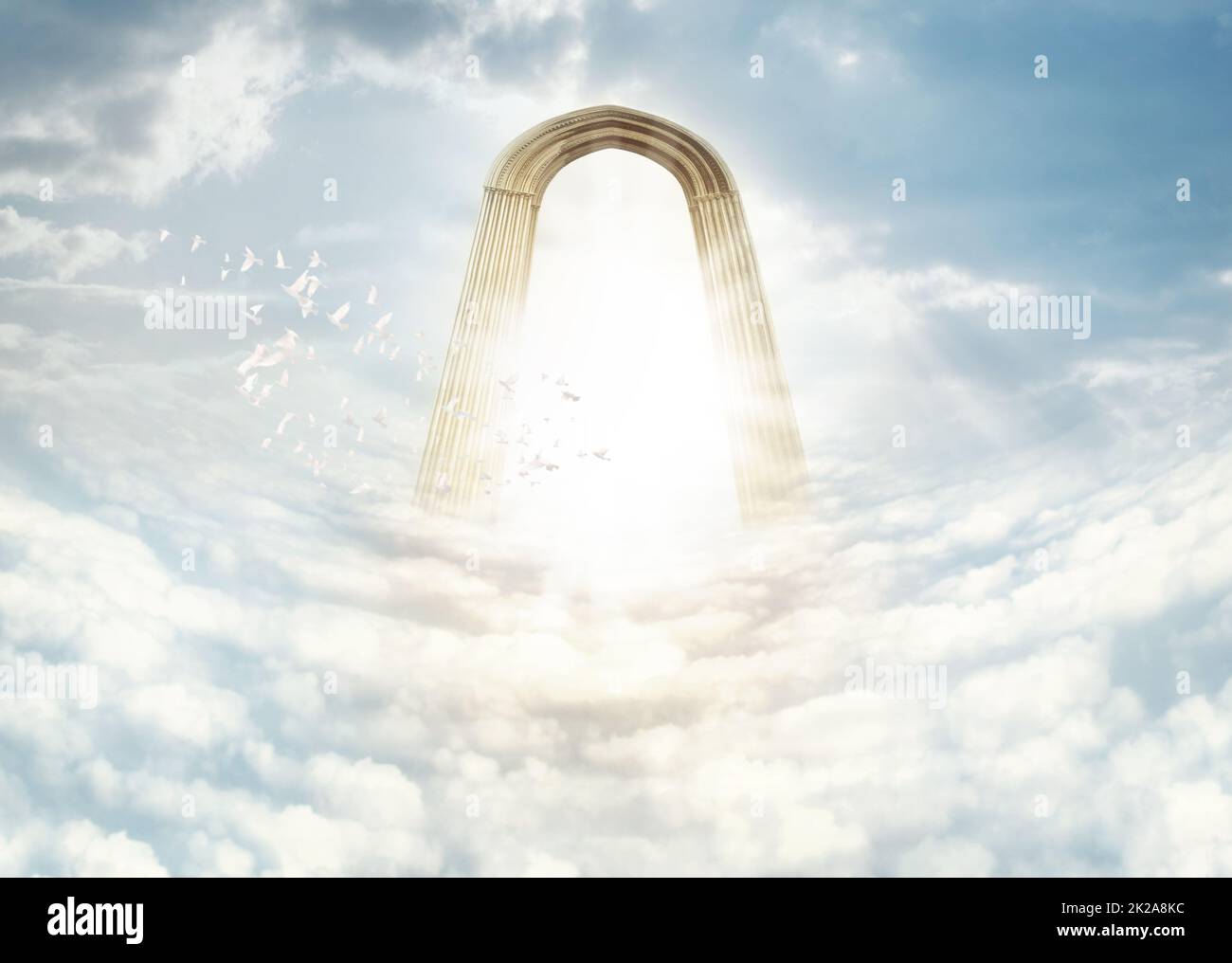
La Recherche de Sens au Croisement des Interprétations
Pour un chercheur en herménutique, le rôle des portes célestes va au-delà de l’esthétique. Elles sont un catalyseur de réflexion sur les questions existentielles : qu’est-ce qui détermine l’entrée dans une "autre dimension" ? Quel message les nuages dorés transmettent-ils ? Ces thèmes ne s’adressent pas qu’aux théologiens : philosophes, artistes, et même ingénieurs conceptuels s’approprient ces métaphores pour imaginer des systèmes idéaux, des interfaces harmonieuses ou des frontières virtuelles.
Quand l’Imaginaire Sert d’Étape dans la Compréhension Scientifique
Les symboles spirituels, encore perçus comme ésotériques, peuvent inspirer des modèles analytiques. Par exemple, l’école de pensée cybernétique utilise des "portes de passage" pour structurer des diagrammes de processus. Imaginer que CDL réfère à une acronyme contextuel (Compte à Découvert Légal, ou autres) reste possible, mais ce texte choisit volontairement de montrer comment même les concepts flous se transforment en outils d’analyse lorsqu’on les place dans un champ symbolique.
Retour à l’Essentiel : Pourquoi Cela Matte aux Recherches Aiguillées
Un utilisateur en quête de sens autour du "CDL" s’attend à des réponses claires, mais les données à disposition pointent vers une réalité plus complexe. La recherche moderne valorise l’interdisciplinarité : un terme flou peut déclencher une exploration croisée entre linguistique, histoire de l’art et sciences socio. L’image des portes du Paradis devient alors une invitation à poser des questions méthodiques, non des réponses figées.